

Home / Manual Handling Training
MANUAL HANDLING TRAINING
Move well.
Reduce the risk.
Practical onsite training helping your team understand manual-handling risk, plan everyday tasks and practise safer ways to move workplace loads.
- Duration
- 3 hours excluding breaks
- Delivery
- Onsite practical, trainer-led
- Certificate
- RCH Training certificated course
Safer handling starts
before the lift.
Manual handling is the use of your hands or bodily force to move or support a load. It reaches beyond picking something up: putting it down, pushing, pulling and carrying all count.
This RCH course focuses on workplace objects and loads. It is not training in moving patients, transferring residents or using people-handling equipment.
Lift. Lower. Push. Pull. Carry.
Better decisions.
Before better technique.
HSE’s risk-management hierarchy comes first: avoid hazardous manual handling so far as reasonably practicable; assess the risk of injury from hazardous operations that cannot be avoided; reduce that risk to as low as reasonably practicable.
Avoid.
Can the hazardous handling be removed from the task?
Assess.
If it cannot be avoided, identify what creates the risk.
Reduce.
Change the task, load or surroundings. Consider suitable assistance.
Handle.
Where handling remains, follow the agreed method and use appropriate technique.
Avoid / Assess / Reduce / Handle is RCH’s editorial summary. “Handle” is an added practical reminder, not a fourth step in an official HSE framework. Read HSE’s guidance.
Look at more
than the load.
Weight is only part of the picture. HSE asks employers to consider the task, individual capability, load and working environment.
TILE is a useful memory aid for these factors, not a statutory assessment method or a substitute for a suitable assessment.
Task
How far, how often and from what height? Consider posture, reaching and carrying distance.
Individual
Who is doing the work? Capability, health and experience can affect what is appropriate.
Load
Consider size, grip, stability and shape as well as weight. Is it awkward, hot or sharp?
Environment
Check the route, floor, available space, lighting and temperature.
There isn’t one legal
maximum lifting weight.
Manual-handling law does not set a universal weight that is safe for everyone to lift. A lighter load can still create risk when the task or conditions are unsuitable.
HSE guideline figures are screening guidance, not legal or safe lifting limits. Understand what an assessment considers.
Technique matters.
But it’s not the whole answer.
RCH combines theory with hands-on practice in safer lifting and handling methods. Planning and technique belong together.
- Know where the load is going and check the route.
- Establish a stable position and a secure hold.
- Keep the load close where the task allows.
- Move smoothly; turn with your feet rather than twisting.
- Put the load down before adjusting its position.
These general HSE principles need adapting to the task. Technique supplements risk controls; it does not replace them.
Sometimes the better lift
is not lifting it.
A suitable trolley, sack truck or other handling aid can reduce manual effort. The choice should follow the task and risk assessment, including the route and working space.
Moving a load on wheels still involves pushing or pulling risks. Appropriate equipment, instruction and workplace procedures matter.
This is awareness of risk reduction—not specialist equipment operator training or a promise of practice with every type of aid.
Training helps.
Task design still matters.
Training does not make a badly designed task safe. First consider whether handling can be avoided, mechanised or reorganised, or whether the load and working environment can be improved.
A course supports your arrangements. It does not replace the employer’s risk assessment or automatically qualify a learner to conduct specialist ergonomic, complex manual-handling or healthcare assessments.
Understand the task.
Practise the principles.
The course develops the planning, safer handling and workplace application described in RCH’s existing Manual Handling of Objects Awareness programme.
General HSE guidance throughout this page provides context. It is not a separate risk-assessor or equipment qualification.
What manual handling means
Recognise the object-handling activities that occur in everyday work, rather than thinking only about lifting a box.
Principles of safer object handling
Build awareness of handling risk and the principles that help reduce the chance of injury when moving workplace loads.
Responsibilities at work
Explore the legal-responsibility awareness included in RCH’s course, including the Health and Safety at Work etc. Act 1974 and Management of Health and Safety at Work Regulations 1999.
Planning before moving
Consider the handling activity before it starts: the object, intended destination and approach to moving it.
Safer lifting methods
Learn safer lifting and kinetic handling techniques as part of RCH’s practical, trainer-led instruction.
Hands-on handling practice
Put the course’s handling principles into practice. Tell RCH about any needs that could affect participation before arranging the session.
Applying the learning at work
Connect the principles to everyday object-handling tasks and your employer’s arrangements. Training supports those arrangements rather than replacing them.
Everyday loads.
Across the workplace.
For employees who lift, carry or move objects, including new starters and staff refreshing their understanding.
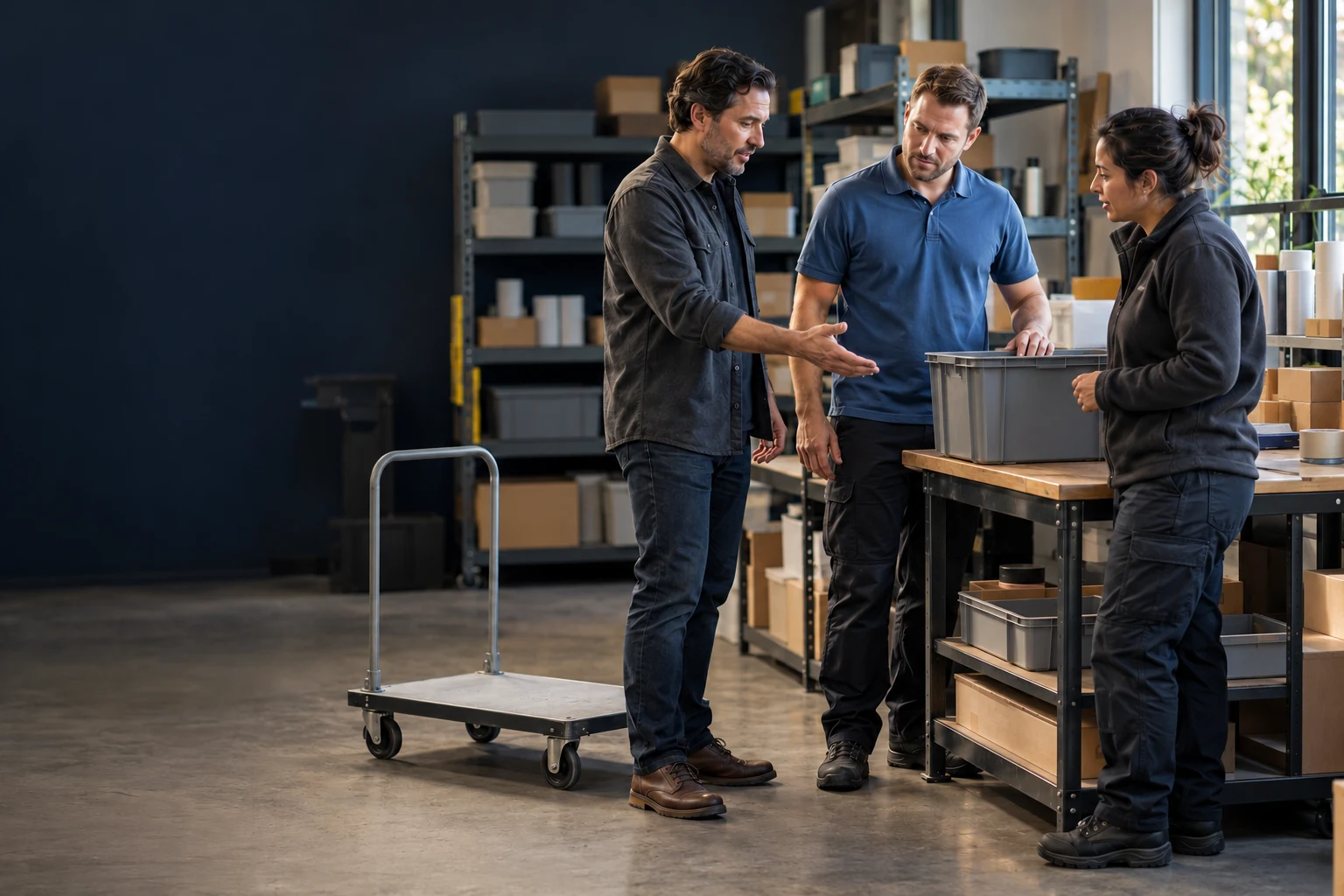
From stockrooms and production areas to school supplies, offices, retail and hospitality, handling is part of many jobs. The useful question is what your people move—not simply which industry you work in.
Objects, not people: patient transfers, resident repositioning and healthcare hoist procedures need appropriate separate training.
Practical training.
At your workplace.
Bring your team together for three hours of trainer-led learning at your premises, excluding breaks. RCH’s course combines theory and hands-on practice.
When requesting a quote, tell us about your workplace, typical objects, proposed learner numbers and any participation needs so the arrangements can be discussed.
Group training is quote-based. A formal workplace risk assessment is not presented as part of this course.
Clear course.
Practical purpose.
RCH Training certificated course
Awareness and practical understanding for handling workplace objects. No external awarding-body qualification is claimed.
The three-year certificate period is RCH’s course policy. It is not a statutory interval that removes the need to review training when work or risks change.
- Course
- Manual Handling Training
- Scope
- Manual handling of workplace objects and loads
- Duration
- 3 hours of trainer-led instruction, excluding breaks
- Delivery
- Onsite at your workplace
- Learning
- Theory and hands-on practice in safer lifting and handling methods
- Certificate
- RCH Training certificate · 3 years
- Price
- Group quote based on your requirements
Guidance behind the principles.
For employers reviewing their arrangements, HSE provides guidance on manual handling at work, assessing unavoidable handling and training. Its assessment guidance explains tools such as MAC and RAPP; this course is not specialist training in those tools.
Trusted by RCH learners.
Live Google reviews of RCH Training across our courses. These are not presented as Manual Handling-only testimonials.


Questions before
you move forward.
Course arrangements, handling principles and the boundaries of awareness training.
What is Manual Handling training?
RCH’s trainer-led course develops awareness and practical understanding of handling workplace objects. It combines theory, planning and hands-on safer lifting and handling practice.
Is manual handling just lifting?
No. It also includes lowering or putting down, pushing, pulling, carrying and moving loads. This course focuses on objects rather than moving people.
Who is the course for?
Employees whose jobs involve lifting, carrying or moving objects, new starters and people refreshing their handling awareness. It applies beyond warehouses to many everyday workplaces.
How long does the course take?
The RCH course provides 3 hours of practical, trainer-led instruction, excluding breaks.
What will we learn?
The course covers safer handling principles, planning before moving loads, safer lifting and kinetic handling techniques, hands-on practice, workplace application and awareness of legal responsibilities.
Is there a legal maximum weight one person can lift?
There is no single legal maximum lifting weight. Risk depends on the activity, the person, the load and the conditions. HSE screening figures are not legal or safe limits.
Does training make a handling task safe?
Not by itself. Avoiding hazardous handling and improving the task, load, equipment or environment may be necessary. Training is one part of risk management.
What does TILE mean?
Task, Individual, Load and Environment. It is a memory aid for considering risk factors, not a statutory assessment method or a replacement for an appropriate assessment.
What should employers consider?
Whether hazardous handling can be avoided, the risks of unavoidable work and how those risks can be reduced. Assessment considers more than weight, including the activity, capability and working conditions.
Is there practical handling during the course?
Yes. RCH’s course combines theory with hands-on practice in safer lifting and handling techniques. Discuss any participation needs with RCH before booking.
Does this qualify us to use mechanical aids?
No specialist operator qualification is claimed. Appropriate aids are part of the wider risk-reduction discussion; using workplace equipment requires suitable instruction and arrangements for that equipment.
Can you train our team at our workplace?
Yes. The verified delivery for this course is onsite at your premises. Contact RCH with your location, preferred timing and proposed learner numbers for a group quote.
Does it cover moving patients or residents?
No. This course concerns workplace objects and loads. It is not patient-transfer, resident-repositioning or healthcare people-handling training.
What certificate will learners receive?
An RCH Training certificate with a three-year period under RCH’s course policy. No FAA, FAIB or regulated qualification is claimed.
How often should training be refreshed?
Review training needs as tasks, equipment or risks change, and when handling knowledge or practice needs updating. RCH’s three-year certificate period is not a universal statutory refresher interval.
Will we be qualified to carry out specialist risk assessments?
No. This awareness course does not automatically establish competence for specialist ergonomic, complex manual-handling or healthcare assessments. Employers still need suitable assessment and competent help where necessary.
Another part of workplace safety.
If you are also arranging training for appointed fire-safety roles, explore Fire Marshal / Fire Warden Training. It is a separate course with a different purpose.
Help your team
approach the task differently.
Arrange practical Manual Handling training at your workplace.
Tell us who you want to train and where your team works.